Publications
Peer-reviewed papers, preprints and reports, newest first.
-
 Master's ThesisMercedes-Benz R&DUniversität StuttgartUnder review
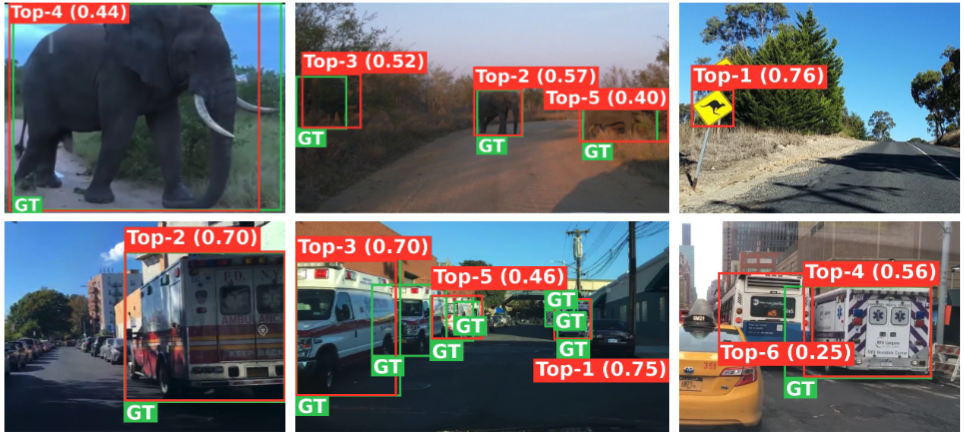
Rare Object Retrieval for Autonomous Driving
Submitted to WACV, 2026
*Equal contribution
-
 Universität StuttgartComputational Cognitive Science Group
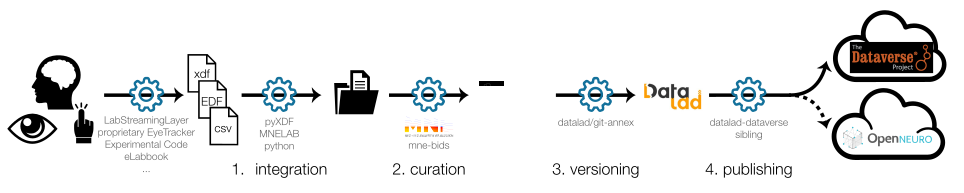
Automating Data Integration and Publishing for Neuroimaging via LSLAutoBIDS
Aperture Neuro, Vol. 6, Issue SI 1, 2026
Presented at deRSE 2026 (presenting author)
Project details
Open-source Python package built with the Computational Cognitive Science group (Prof. Benedikt Ehinger, Universität Stuttgart) to standardize, version and archive the EEG and eye-tracking data produced by neuroscience experiments — a large, unwieldy corpus that’s otherwise tedious to manage.
- Data standardization: converts raw recordings into BIDS-compliant datasets
- Data versioning: uses Datalad for version control
- Data archiving: uses Dataverse for long-term archiving
-
 DSSGx MunichLMU MünchenUnder review
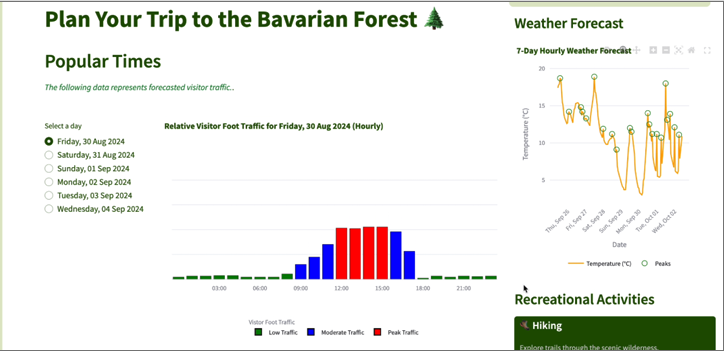
From Monitoring to Forecasting: An Integrated Visitor Insights Tool for Protected Area Management
Journal of Outdoor Recreation and Tourism
Project details
Built as part of Data Science for Social Good Munich (DSSGx) 2024, with an interdisciplinary team of economists, social scientists and computer scientists, to harmonize tourism and nature protection in the Bavarian Forest National Park.
- Data pipeline harmonizing sensor and survey data from multiple sources
- Predictive model forecasting weekly visitor traffic
- Dashboard visualizing park insights and forecasted traffic for park management
- Technical documentation of the pipeline, model and suggested future work
-
Universität StuttgartCollaborative Artificial Intelligence Group
CryptoQA: A Large-scale Question-answering Dataset for AI-assisted Cryptography
arXiv preprint arXiv:2512.02625, 2025
Project details
Built an LLM-based assistant for cryptography problems, which need a blend of natural-language understanding and multistep mathematical reasoning that general-purpose LLMs handle poorly. Curated CryptoQA, a dataset drawn from academic textbooks and resources, and fine-tuned four CryptoLLM variants — starting from both a math-tuned and a general-purpose base model, with single-stage and two-stage (math dataset, then CryptoQA) fine-tuning — then ran a qualitative behavioural analysis of base vs. fine-tuned models.
- CryptoQA: a public dataset of cryptography questions
- Four fine-tuned CryptoLLM model variants
- Two-stage fine-tuning recipe (general math → cryptography)
- Qualitative analysis of base vs. fine-tuned reasoning behaviour
-
Bachelor ThesisAssam Engineering College
Object Detection and Tracking Turret based on Cascade Classifiers and Single Shot Detectors
International Conference on Computational Performance Evaluation (ComPE), Shillong, India, 2020
-
Deep Learning Based Flood Mapping: A Case Study from a Flood-vulnerable State in Northeastern India
Conference abstract, American Geophysical Union (AGU) Fall Meeting, Chicago, USA, 2022